
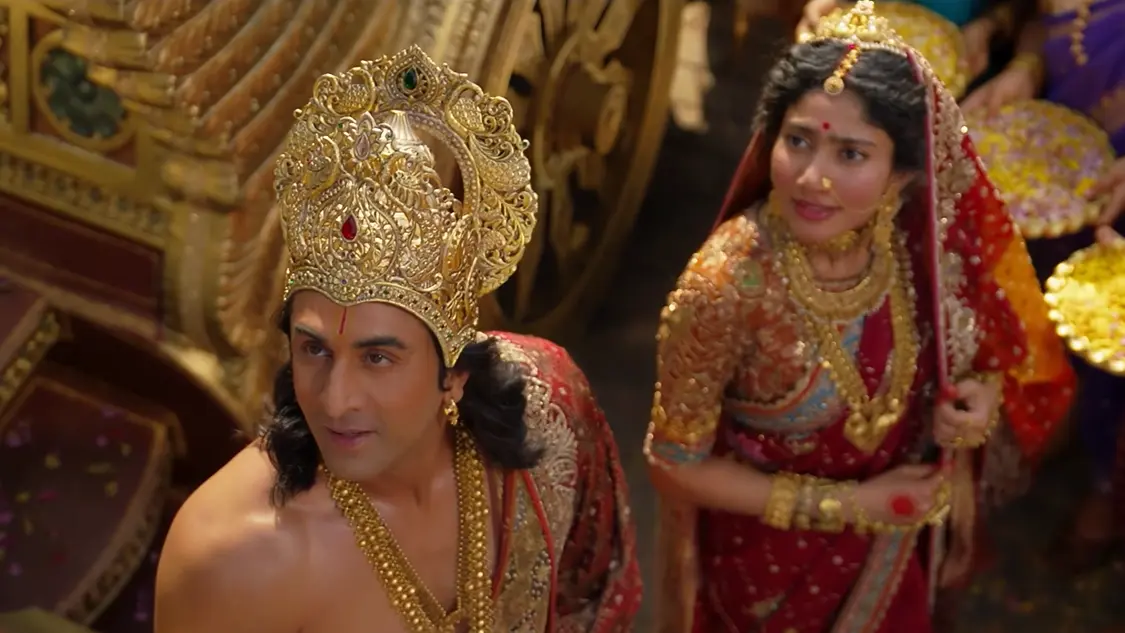
Ramayana Part One is an ambitious cinematic adaptation of the Indian epic that impresses with its breathtaking visuals, elaborate world-building and powerful performances. Directed by Nitesh Tiwari, the film delivers several emotionally moving moments and a grand theatrical experience, although inconsistent background music, uneven CGI and pacing issues prevent it from becoming a completely satisfying cinematic journey.
Ramayana Part One Movie Review: Story and Screenplay
One of the film’s biggest strengths is its approach to the source material. Rather than simply presenting familiar mythological events as a checklist, Nitesh Tiwari focuses on the characters, their emotional journeys and the relationships that shape the narrative.
The storytelling treats the epic with seriousness and attempts to offer a fresh cinematic perspective on a story that audiences already know. Several emotional sequences work particularly well, giving the narrative moments of genuine impact.
However, the film’s approximately three-hour runtime can test the patience of some viewers. While the deliberate pacing allows certain moments to develop, a few sequences feel unnecessarily stretched and could have benefited from tighter editing.
Ranbir Kapoor, Sai Pallavi and Yash Deliver Strong Performances
The performances are among the film’s strongest aspects. Ranbir Kapoor brings a mature, composed and dignified presence to the role of Shri Ram. His restrained expressions and controlled performance help communicate Ram’s calm nature and emotional depth without relying on unnecessary dramatics.
Sai Pallavi makes a strong impression as Sita. Her emotional maturity, screen presence and ability to convey vulnerability add considerable weight to the character.
Yash is another major highlight as Ravana. He captures the character’s intimidating personality and menace, bringing a commanding presence to the screen. However, there are moments when his facial expressions and the dubbed voice seem slightly disconnected, affecting the overall impact of certain scenes.
Ravi Dubey as Lakshman also contributes positively, while Vivek Oberoi and the supporting cast add to the film’s ensemble. That said, a few supporting performances occasionally lean towards overacting.
Nitesh Tiwari’s Direction and Impressive World-Building
Nitesh Tiwari deserves credit for attempting to present the Ramayana on such an ambitious cinematic scale. His creative framing, imaginative interpretation and attention to the world-building help the film establish its own visual identity.
The depictions of Ayodhya and Lanka are particularly impressive, creating a sense of scale and atmosphere. The cinematography also deserves appreciation, especially in the low-light sequences, which look beautiful and realistic. Some daytime shots, however, appear comparatively flat.
The climactic confrontation involving Ravana and Jatayu stands out as one of the film’s most memorable sequences. It combines visual spectacle with emotional resonance, demonstrating the potential of this ambitious adaptation.
Visual Effects and Cinematography: A Major Highlight
The visual effects, handled by DNEG, are among the film’s biggest achievements. The landscapes, environmental details and particle effects look spectacular and represent a significant technical achievement for Indian cinema.
The film succeeds in creating an immersive world, particularly through its large-scale locations and carefully constructed environments.
However, the quality is not equally consistent throughout. The designs of certain demonic creatures and monsters feel cartoonish and lack the detail and realism required to make them convincing. The sequence involving the 14,000 demons also lacks the necessary weight and visual impact.
Some action sequences, particularly the fight scenes in Lanka, feel choppy and lack clarity in their choreography. As a result, the action does not always deliver the excitement expected from a production of this scale.
Music and Background Score: A Missed Opportunity
Music is one area where Ramayana Part One could have done considerably better. The background score is inconsistent, working effectively in certain emotional sequences but failing to create the desired impact in several other important moments.
A film based on an epic like the Ramayana offers enormous opportunities for memorable musical compositions and powerful background themes. Unfortunately, the music does not always rise to the occasion.
The song Dharti Hai Ambar had the potential to create a stronger emotional connection, but its limited use feels like a missed opportunity. A more consistent and memorable musical experience could have elevated several key moments.
What Works and What Doesn’t in Ramayana Part One?
The biggest positives are undoubtedly the performances, cinematography, world-building and visual effects. Ranbir Kapoor brings dignity to Ram, Sai Pallavi adds emotional depth as Sita, and Yash delivers a commanding portrayal of Ravana. Nitesh Tiwari’s direction also ensures that the film feels like an ambitious cinematic interpretation rather than a routine retelling.
On the other hand, inconsistent music, cartoonish monster designs, uneven action choreography and occasional overacting affect the overall experience. The lengthy runtime and slow pacing may also divide audiences.
Despite these shortcomings, the film has enough impressive moments to keep viewers invested in its cinematic world.
Also Read: Ramayana: Not Amitabh Bachchan! Is Anupam Kher the Voice Behind Jatayu in Ranbir Kapoor-Starrer
Final Verdict: Is Ramayana Part One Worth Watching?
Ramayana Part One is an ambitious and visually impressive addition to Indian cinema. It may not be flawless, but its grand world-building, strong performances and emotional storytelling make it a worthwhile theatrical experience.
Ranbir Kapoor, Sai Pallavi and Yash deliver performances that anchor the film, while Nitesh Tiwari’s direction gives this familiar epic a fresh cinematic presentation. The technical achievements, particularly the landscape and particle effects, deserve appreciation, even though certain CGI elements and action sequences fall short.
The film is a mixed experience, with its strengths and weaknesses almost equally balanced. Nevertheless, it represents a significant and proud step for Indian cinema, offering audiences a grand adaptation that deserves to be experienced on the big screen. For the best visual experience, watching it in 2D is recommended.
Rating: 3/5 Stars

